
Pinterest Automation has become an increasingly popular strategy for bloggers, affiliate marketers, online store owners, and content creators who want to maintain a consistent presence on Pinterest without spending hours manually creating and publishing every pin. But does automation actually perform better than manual pinning? 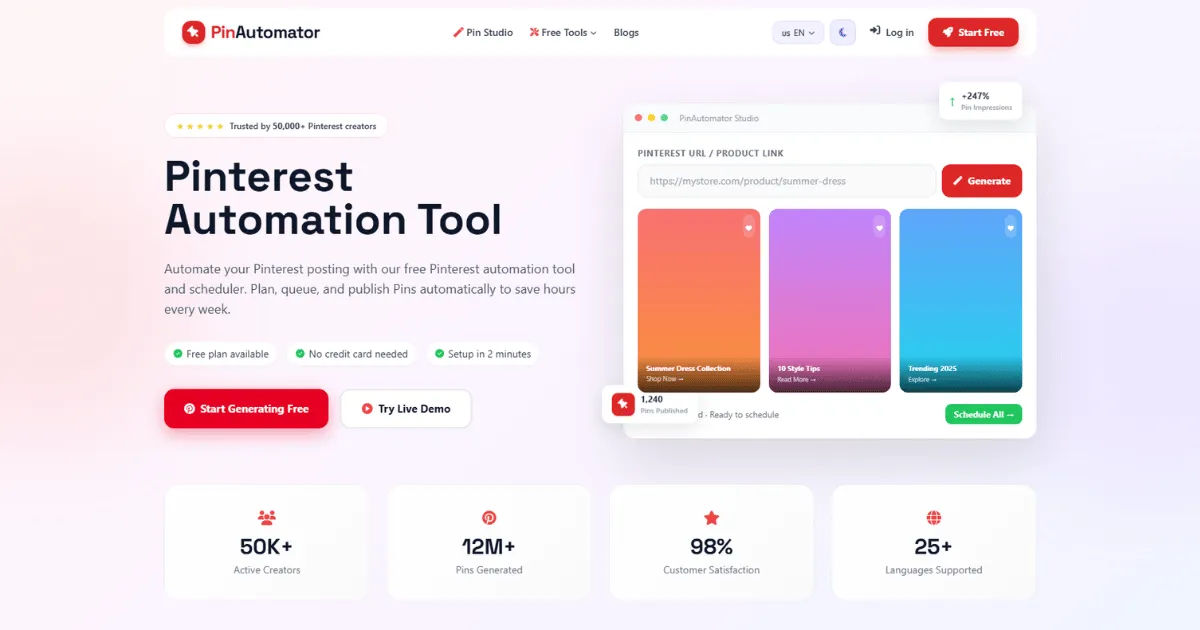
Pinterest is different from many other social media platforms because it works as both a visual discovery engine and a search platform. Users visit Pinterest to find ideas, products, tutorials, inspiration, and solutions. Because of this, consistency matters, but quality and relevance matter just as much. A strategy that publishes hundreds of low-quality pins may not perform as well as a carefully planned approach that publishes fewer, more useful pins.
For many businesses and creators, Pinterest Automation can make content distribution more efficient. It can help schedule pins, organize campaigns, maintain a regular publishing routine, and reduce repetitive work. However, manual pinning still has important advantages, especially when creating highly personalized content, responding to trends, and monitoring performance closely.
The real question is not simply whether Pinterest Automation is better than manual pinning. Instead, the better question is which approach—or combination of approaches—can help you achieve your specific Pinterest goals.
Pinterest Automation
Pinterest Automation refers to using tools, software, or scheduled workflows to simplify and manage Pinterest marketing activities. Instead of manually opening Pinterest every day and publishing individual pins, users can prepare content in advance and schedule it for publication.
Automation can involve several different activities. These may include scheduling pins, organizing content calendars, publishing pins at selected times, managing multiple boards, and monitoring basic performance data.
The purpose is usually to reduce repetitive tasks while maintaining a consistent publishing schedule.
For example, a blogger may create 30 pins for different blog posts at the beginning of the month. Rather than manually publishing each pin every day, the blogger can schedule the content in advance. The pins are then published according to the selected schedule.
This approach can save significant time.
However, effective Pinterest Automation is not about simply pushing content onto the platform as quickly as possible. Good automation still requires human planning, creativity, research, and monitoring.
Automation handles repetitive processes. Humans should still control the strategy.
What Is Manual Pinning?
Manual pinning means creating, uploading, scheduling, and publishing Pinterest content by hand. The user decides when each pin should be published and manages the process directly through Pinterest or another platform without relying heavily on automated workflows.
Manual pinning gives creators more control over individual publishing decisions.
A content creator might log into Pinterest every morning, review trending topics, create a pin, write a description, select a relevant board, and publish the content immediately.
This method can be especially useful for businesses that want to react quickly to current events or trends.
Manual pinning also allows users to spend more time reviewing their accounts. They may notice which content is receiving engagement, which topics are becoming popular, and which visual styles appear to attract attention.
The main disadvantage is time.
As the number of pins increases, manual publishing can become repetitive and difficult to maintain. A creator managing a large content library may spend several hours every week performing tasks that could otherwise be scheduled.
Why Consistency Matters on Pinterest
Consistency is one of the most important reasons marketers consider Pinterest Automation.
Pinterest marketing often works better as a long-term strategy rather than a short campaign. A single pin may not immediately produce significant traffic. Some pins can take time to gain visibility through search and recommendations.
Consistent publishing gives Pinterest more opportunities to understand your content.
It also gives your audience more opportunities to discover your website, products, or ideas.
Manual pinning can certainly provide consistency, but maintaining a daily or weekly schedule becomes challenging when other responsibilities compete for attention.
A business owner may start by manually publishing five pins per week. After several months, however, the routine may become difficult to maintain.
Automation can help solve this problem.
With a carefully planned schedule, content can continue to appear regularly even when the creator is busy.
This is one of the strongest advantages of Pinterest Automation.
The Main Benefits of Pinterest Automation
The biggest benefit of Pinterest Automation is time savings.
Instead of repeatedly performing the same publishing tasks, creators can prepare content in advance. This allows them to spend more time on strategy, content development, SEO, product creation, or customer service.
Another benefit is scheduling flexibility.
A creator can prepare content weeks ahead of time. This is particularly helpful for businesses with seasonal campaigns.
For example, a retailer preparing for the holiday shopping season can create and organize promotional pins in advance. The content can then be scheduled to appear during the appropriate period.
Automation can also reduce the risk of forgetting to publish.
People often have unpredictable schedules. Meetings, family responsibilities, deadlines, and unexpected problems can interfere with content publishing.
A scheduled system provides more reliability.
Pinterest Automation can also make it easier to manage large content libraries. A website with hundreds of blog posts may have many pieces of content that can be promoted on Pinterest.
Manually managing every pin can become overwhelming.
A structured scheduling system makes large-scale content distribution easier.
The Benefits of Manual Pinning
Although automation offers many advantages, manual pinning should not be dismissed.
One of its biggest benefits is flexibility.
When manually managing an account, you can immediately respond to trends, seasonal events, breaking topics, or changes in audience interests.
Suppose a particular topic suddenly becomes popular. A manual Pinterest manager can create relevant content and publish it immediately.
This type of responsiveness can be more difficult with a heavily automated content calendar.
Manual pinning also encourages closer attention to the account.
When users regularly interact with their Pinterest profiles, they may become more aware of what is working.
They can notice patterns in visual design, content topics, keywords, and audience behavior.
Manual management can therefore improve strategic awareness.
It may also be better for businesses that publish a small amount of highly specialized content.
If a company only publishes five carefully designed pins each month, automation may not provide enough benefit to justify a complicated scheduling system.
Pinterest Automation vs. Manual Pinning: Time Efficiency
Time efficiency is where Pinterest Automation usually has the clearest advantage.
Manual pinning requires repeated effort.
You need to create or upload content, write descriptions, select boards, add links, and publish each pin.
When this process is repeated hundreds of times, the time requirement can become substantial.
Automation reduces repetitive work by allowing users to prepare content in batches.
For example, a marketer could spend one afternoon creating and scheduling several weeks of Pinterest content.
The rest of the month can then be spent on more valuable activities.
Manual pinning, on the other hand, requires ongoing attention.
This does not necessarily make it bad. In some situations, the extra attention can improve content quality.
However, for creators managing large content libraries, automation generally provides better time efficiency.
Pinterest Automation vs. Manual Pinning: Content Quality
Content quality depends less on whether a pin is automated or manually published and more on how the content was created.
An automated system does not automatically produce poor content.
If you create excellent pins and schedule them using a reliable system, automation can distribute high-quality content efficiently.
The problem occurs when marketers assume that automation can replace creativity.
It cannot.
Automated publishing cannot compensate for weak designs, irrelevant topics, poor keyword research, or unhelpful landing pages.
Manual pinning also does not guarantee quality.
A person can manually publish low-quality pins just as easily as an automated system can distribute them.
The important factor is the quality of the content strategy.
The best approach is to use automation for distribution while keeping creative decisions under human control.
Pinterest Automation and Pinterest SEO
Pinterest SEO plays an important role in helping content become discoverable.
Keywords can appear in pin titles, descriptions, board names, and other relevant areas.
Automation can help organize and schedule content, but keyword research should generally remain a thoughtful human-led process.
For example, if you operate a food website, you may discover that users search for specific phrases related to easy dinners, meal planning, or quick recipes.
You can then create content around those topics.
Automation can distribute the content according to your schedule.
However, it should not replace research.
A strong Pinterest strategy combines keyword research, attractive visual content, relevant descriptions, and consistent publishing.
Pinterest Automation becomes more valuable when it supports these activities instead of attempting to replace them.
The Risk of Over-Automation
One of the biggest mistakes marketers make is relying too heavily on automation.
Automation is useful, but excessive automation can make an account feel repetitive or disconnected from current audience interests.
If the same content is repeatedly published without meaningful variation, performance may decline.
Another problem is ignoring changes in platform behavior.
Pinterest evolves over time. User interests change. Search behavior changes. Content formats may change.
An automated schedule created six months ago may not be appropriate today.
That is why automated systems should be reviewed regularly.
Automation should reduce repetitive work, not eliminate human oversight.
A successful strategy usually includes regular account reviews, content updates, performance analysis, and strategic adjustments.
When Manual Pinning Is Better
Manual pinning can be the better option for businesses that need immediate responsiveness.
For example, a news website may publish content based on rapidly changing events. A manual workflow can allow the team to create and publish relevant pins immediately.
It may also be useful for influencers and personal brands.
These creators often want their Pinterest activity to reflect their current interests, experiences, and creative direction.
Manual publishing allows them to make decisions based on what is happening right now.
Small businesses with limited content may also prefer manual management.
If you only publish a few pins per week, the time savings from automation may be relatively small.
In such cases, manually managing content can provide a more personal experience.
When Pinterest Automation Is Better
Pinterest Automation is usually more valuable when volume and consistency are important.
Bloggers with large content libraries can benefit significantly.
Affiliate marketers may also use automation to maintain regular publishing schedules.
E-commerce businesses can schedule product-related content around seasonal campaigns.
Agencies managing multiple accounts may find automation particularly useful because it reduces repetitive administrative tasks.
Automation is also beneficial for people who struggle to maintain a consistent schedule.
Instead of trying to remember every publishing task, they can organize content in advance.
The result is a more predictable workflow.
The Hybrid Approach: Combining Automation and Manual Pinning
For many Pinterest users, the best strategy is not choosing between automation and manual pinning.
It is combining both.
This hybrid approach uses automation for repetitive tasks while preserving manual involvement for important strategic decisions.
For example, you could automate regular evergreen content.
At the same time, you could manually publish seasonal content, trend-based posts, and special campaigns.
This creates a balance between efficiency and flexibility.
A hybrid strategy also allows marketers to monitor their accounts regularly.
You can review performance, identify successful content, and adjust future schedules.
This is often more effective than completely automating everything.
How to Build an Effective Pinterest Automation Strategy
The first step is defining your goals.
Your goal might be increasing website traffic, generating leads, promoting products, building brand awareness, or supporting affiliate marketing.
Your goal determines what type of content you should publish.
The next step is creating a content library.
Identify your strongest blog posts, products, landing pages, guides, and resources.
Then create multiple visual variations where appropriate.
Different designs can help you test which formats attract the most attention.
After that, create a publishing calendar.
Decide how frequently you want to publish and organize your content accordingly.
The schedule should be realistic.
Publishing a manageable amount of high-quality content is generally better than creating a large volume of weak content.
Once your calendar is ready, automation can handle much of the repetitive scheduling process.
However, review your content regularly.
Make sure links still work, descriptions remain relevant, and the content reflects your current brand.
Creating Better Pins for Automated Campaigns
The quality of your pins directly influences the effectiveness of your strategy.
Strong pins usually have clear visual communication.
Users should quickly understand what the pin is about.
Text should be easy to read, especially on mobile devices.
Images should support the message rather than distract from it.
The design should also match the content behind the pin.
If a pin promises a detailed guide, the linked page should provide that guide.
Misleading designs may generate clicks but can damage trust.
When using Pinterest Automation, it is especially important to review scheduled content before publication.
Because automated systems can publish content without immediate human involvement, mistakes may remain unnoticed unless you have a review process.
Measuring the Performance of Pinterest Automation
Automation should never be treated as a set-it-and-forget-it solution.
You need to measure results.
Important metrics may include impressions, saves, outbound clicks, engagement, and website traffic.
The most valuable metric depends on your objective.
If your goal is website traffic, outbound clicks may matter more than impressions.
If your goal is brand awareness, impressions and reach may be more important.
If you sell products, you may want to track how Pinterest visitors behave after arriving on your website.
The purpose of analytics is to understand what is working.
You can then adjust your content strategy.
For example, if certain topics consistently generate more traffic, you may want to create more content around those subjects.
If a particular visual style performs well, you can experiment with similar designs.
Common Mistakes With Pinterest Automation
One common mistake is publishing too much content without a clear strategy.
More pins do not automatically mean better results.
Another mistake is using repetitive designs.
Even when promoting the same article, creating meaningful visual variations can make your content more appealing.
Ignoring Pinterest SEO is another problem.
Automation does not replace keyword research.
You still need to understand what your audience searches for and create content that matches those interests.
Some marketers also forget to monitor links.
If a website page moves or disappears, scheduled pins may continue sending users to broken pages.
Regular maintenance is therefore essential.
Finally, some users automate everything and stop paying attention to their audience.
This can make their strategy less relevant over time.
Automation should support your marketing strategy, not become the strategy itself.
Is Pinterest Automation Safe?
Pinterest Automation can be safe when used responsibly and in accordance with Pinterest's current policies and guidelines.
The key is using reputable scheduling solutions and avoiding aggressive behavior that could appear spammy.
The goal should be to publish useful, relevant content consistently.
Users should also avoid creating large volumes of nearly identical content simply to increase publishing frequency.
A responsible approach focuses on quality and audience value.
Before adopting any automation platform, it is wise to understand its features and how they work.
You should also keep up with Pinterest's latest policies because platform rules and best practices can change.
How Much Should You Automate?
There is no universal answer.
The right level of automation depends on the size of your business and the amount of content you produce.
A small blogger may only need basic scheduling.
A larger business may require more advanced content management.
The important principle is to automate repetitive tasks while keeping important decisions under human control.
You might automate routine evergreen content but manually manage important campaigns.
You might schedule regular blog promotion but manually publish content connected to emerging trends.
This approach provides efficiency without sacrificing creativity.
Is Pinterest Automation Better for Beginners?
Beginners can benefit from automation, but they should not rush into complex systems.
It is often better to understand Pinterest manually first.
Spend time learning how Pinterest works.
Understand your audience.
Study successful content.
Learn about keywords and visual design.
Once you understand the fundamentals, automation becomes much more useful.
Otherwise, beginners may simply automate ineffective strategies.
Automation can make a good system more efficient.
It cannot automatically turn a poor strategy into a successful one.
For this reason, beginners should focus on learning first and automating second.
Is Pinterest Automation Better for Bloggers?
Bloggers are among the groups that can benefit most from automation.
A successful blog may have hundreds or thousands of articles.
Each article can potentially be promoted through Pinterest.
Managing this manually can require a significant amount of time.
Automation allows bloggers to organize their content more efficiently.
Evergreen articles can continue to be promoted over long periods.
Seasonal posts can be scheduled around relevant times of the year.
New content can be added to the publishing calendar without disrupting the entire workflow.
For bloggers, the combination of evergreen content and scheduled distribution can make Pinterest Automation particularly valuable.
Is Pinterest Automation Better for E-Commerce Businesses?
E-commerce businesses can also benefit from automation.
Online stores often have large product catalogs.
Creating and scheduling promotional content can become repetitive.
Automation can help businesses maintain a consistent presence while their teams focus on product development, customer service, and sales.
However, e-commerce brands should still monitor seasonal trends and customer behavior.
A product that was popular last year may not have the same demand today.
Manual oversight remains important.
The strongest approach is often to automate routine product promotion while manually managing major campaigns and seasonal opportunities.
The Role of Human Creativity
No matter how advanced automation becomes, human creativity remains essential.
Pinterest is a visual platform.
People respond to attractive designs, useful ideas, emotional connections, and clear solutions.
Automation cannot fully replace the creative process behind these elements.
Someone still needs to understand the audience.
Someone needs to decide which topics matter.
Someone needs to create compelling designs.
Someone needs to evaluate performance.
Automation simply helps distribute the results of that work more efficiently.
This is why successful Pinterest Automation should always have a human strategy behind it.
The Cost Factor
Cost is another consideration.
Some automation tools are free or offer basic features at no cost.
More advanced platforms may require monthly subscriptions.
Manual pinning, on the other hand, may not require additional software costs.
However, time itself has value.
If manual pinning takes several hours every week, the opportunity cost may be significant.
A business owner could potentially spend those hours improving products, writing content, communicating with customers, or developing new marketing campaigns.
Therefore, the cost of automation should be evaluated against the time it saves.
For businesses with high content volumes, automation may quickly justify its cost.
For smaller accounts, manual management may remain practical.
How to Decide Between Automation and Manual Pinning
Start by considering the size of your content library.
If you have only a small amount of content, manual pinning may be manageable.
If you have hundreds of articles or products, automation becomes more attractive.
Next, consider your available time.
If you can comfortably manage your Pinterest account every day, manual pinning may work.
If you frequently miss publishing schedules, automation can provide greater consistency.
Then consider how quickly your content changes.
Businesses that rely heavily on trends may benefit from more manual control.
Businesses focused on evergreen content may benefit more from scheduling.
Finally, consider your goals.
If your priority is efficiency and consistent distribution, Pinterest Automation may be the better choice.
If your priority is real-time engagement and trend responsiveness, manual management may be more suitable.
The Best Strategy for Long-Term Growth
Long-term Pinterest growth requires more than publishing content.
You need to understand your audience and continuously improve your approach.
Use analytics to identify successful topics.
Study which designs generate attention.
Review which pages attract visitors.
Experiment with new ideas.
Update old content when necessary.
Automation can help maintain consistency throughout this process.
However, growth comes from learning and adapting.
A strategy that worked last year may not produce the same results today.
Successful marketers regularly review their performance and make adjustments.
This makes Pinterest Automation a supporting tool rather than a replacement for marketing intelligence.
Conclusion
So, is Pinterest Automation better than manual pinning?
In many cases, it can be—but not because automation is inherently more effective at creating successful content. Its greatest advantage is efficiency. It can reduce repetitive work, improve consistency, simplify content scheduling, and help marketers manage large volumes of Pinterest content.
Manual pinning still has important advantages. It provides greater flexibility and allows marketers to react quickly to trends, seasonal opportunities, and changes in audience behavior. It can also encourage closer attention to an account and help creators develop a better understanding of what their audience wants.
For most serious Pinterest marketers, the strongest solution is a combination of both methods.
Pinterest Automation can handle predictable, repetitive publishing tasks. Manual management can be reserved for creative decisions, trend-based content, special campaigns, and strategic adjustments.
The key is to avoid treating automation as a substitute for good marketing.
A scheduled pin will not automatically become successful simply because it was published through an automated system. The content still needs to be useful, relevant, visually appealing, and optimized for the right audience.
Similarly, manually publishing every pin does not guarantee better performance. If the content strategy is weak, manual effort alone will not solve the problem.
The real advantage comes from using technology to support a thoughtful strategy.
For bloggers, automation can make it easier to promote a large library of evergreen content. For e-commerce businesses, it can simplify product promotion and seasonal scheduling. For agencies, it can reduce repetitive administrative work across multiple accounts. For creators, it can provide consistency while freeing more time for creative projects.
At the same time, human involvement should remain an important part of the process. Regular performance reviews, keyword research, content updates, design improvements, and trend monitoring all contribute to long-term success.
The best approach is therefore not to choose automation blindly or reject it completely. Instead, identify which Pinterest tasks are repetitive and predictable, then automate those tasks. Keep creative, strategic, and time-sensitive decisions under human control.
When used this way, Pinterest Automation can become a powerful part of a broader Pinterest marketing strategy. It helps save time without removing the creativity and judgment that make content valuable.
Ultimately, the better approach depends on your goals, resources, content volume, and audience. Manual pinning may be ideal for smaller accounts and highly responsive campaigns, while automation can provide major benefits for businesses and creators who need scale and consistency.
For many users, the most effective solution is a balanced hybrid strategy. Automate what saves time, manually manage what requires creativity, and continuously measure the results. That combination can provide the efficiency of automation while preserving the flexibility and human insight of manual pinning.