
Clean windows can make a home or commercial building look brighter, fresher, and more welcoming. However, achieving spotless glass requires more than simply using a bucket of water and a cleaning cloth. The type of water used during the cleaning process can make a significant difference in the final results. Many professional cleaners now use advanced water purification systems to remove minerals and other impurities that can leave marks on glass surfaces. 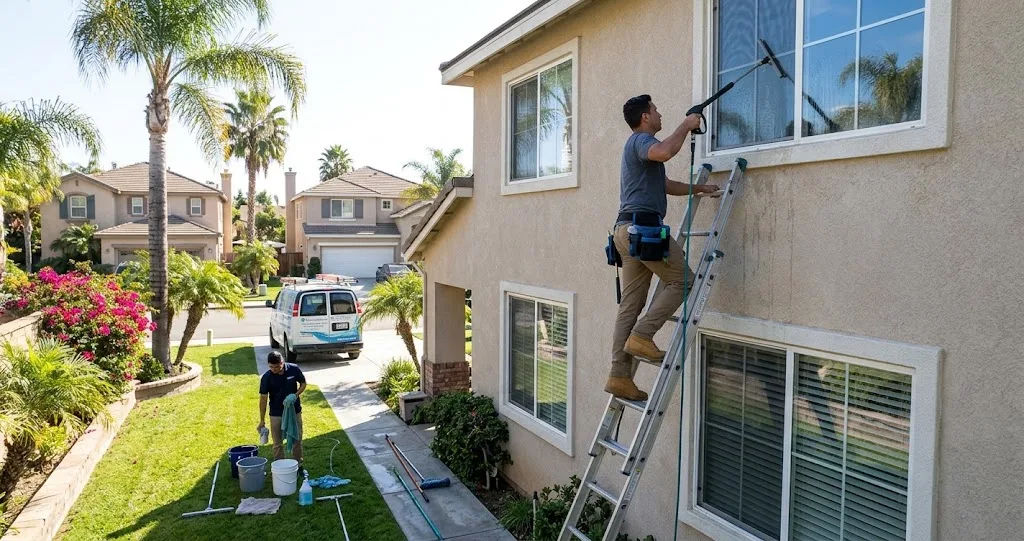 When researching professional services, homeowners often wonder whether Window Cleaning near me providers use purified water or ordinary tap water. The answer depends on the cleaning company, its equipment, and the type of cleaning service offered. Many professional window cleaners use purified water because it helps prevent streaks, spots, and mineral deposits.
Understanding how purified water works can help you choose a suitable cleaning service. It also explains why some professional cleaning methods produce clearer results than traditional techniques. In this comprehensive guide, we will explore water purification, its benefits, professional cleaning equipment, and what customers should consider before booking a window cleaning appointment.
What Is Purified Water in Window Cleaning?
Purified water is water that has undergone a treatment process to remove dissolved minerals, salts, and other impurities. Ordinary tap water contains different substances depending on its source and local water supply.
Although these substances are generally safe for everyday use, they can create problems when cleaning glass.
For example, tap water may contain calcium, magnesium, and other minerals. When water evaporates from a window, these minerals can remain behind and create visible spots.
Professional window cleaners often use purified water to reduce this problem.
How Is Water Purified?
Professional cleaning companies may use several filtration technologies to prepare water for window cleaning.
Common methods include:
-
Reverse osmosis filtration
-
Deionization systems
-
Carbon filtration
-
Sediment filtration
-
Multi-stage purification systems
Each method targets different impurities. Some systems combine multiple technologies to produce water with very low mineral content.
Why Does Water Quality Matter?
Glass surfaces easily show watermarks, especially when exposed to direct sunlight.
If ordinary water contains dissolved minerals, evaporation can leave behind white marks. These deposits may become more noticeable after the glass dries.
Purified water reduces the amount of mineral residue left behind.
This makes it particularly useful for professional cleaning services that want to achieve a clear finish without repeatedly wiping the glass.
Do Professional Window Cleaning Services Use Purified Water?
Yes, many professional window cleaning companies use purified water, especially when offering water-fed pole cleaning services.
However, not every company uses the same equipment or cleaning process.
Some businesses continue to use traditional methods involving tap water, professional glass-cleaning solutions, squeegees, and microfiber cloths.
Others invest in modern purification systems to improve cleaning efficiency.
When comparing Window Cleaning near me services, it is worth asking whether the company uses purified water and what purification technology it relies on.
Traditional Window Cleaning Methods
Traditional window cleaning generally involves applying a cleaning solution to the glass and removing it with a professional squeegee.
The cleaning solution may contain water and a suitable cleaning agent.
This method can produce excellent results when performed correctly.
However, the quality of the water, cleaning equipment, and technician's experience can influence the outcome.
Modern Water-Fed Pole Cleaning
Water-fed pole cleaning is a modern technique that uses purified water and specialized equipment.
The system sends purified water through a long pole to a brush attached at the end.
The cleaner uses the brush to loosen dirt from the glass and surrounding frames. The purified water then rinses away the loosened dirt.
Because the water contains very few dissolved minerals, it can dry without leaving the typical mineral spots associated with untreated tap water.
This technique is particularly useful for exterior windows on multi-story buildings.
How Does Purified Water Clean Windows?
Purified water works differently from ordinary tap water because it contains fewer dissolved minerals.
Its effectiveness comes from its ability to loosen and carry away dirt without leaving significant mineral residue.
Removing Dirt and Dust
Windows collect dust, pollen, pollution, fingerprints, and other environmental contaminants.
When purified water is applied through a suitable cleaning system, it helps loosen these materials from the glass.
A specialized brush provides additional mechanical cleaning action.
The combination helps remove dirt that may otherwise remain attached to the surface.
Preventing Mineral Spots
One of the main reasons professional cleaners use purified water is to reduce mineral deposits.
Tap water can leave spots when droplets evaporate.
Purified water contains fewer dissolved minerals, so there is less mineral residue left behind after rinsing.
This is especially helpful when cleaning large exterior glass surfaces.
Supporting a Clear Finish
Purified water can help produce a cleaner appearance because it reduces the likelihood of watermarks.
However, the final result also depends on the cleaning technique.
A dirty brush, contaminated equipment, or insufficient rinsing can still affect the quality of the finished window.
What Types of Purification Systems Do Window Cleaners Use?
Professional window cleaning businesses may use different purification systems depending on their equipment and service requirements.
Understanding these systems can help customers evaluate a company's cleaning process.
Reverse Osmosis Systems
Reverse osmosis is a filtration process that uses a special membrane to reduce dissolved minerals and other impurities in water.
Water passes through the membrane under pressure.
Many unwanted substances are separated from the purified water during this process.
Reverse osmosis systems are commonly used in professional water purification setups.
They can produce large quantities of purified water, making them suitable for businesses that clean multiple properties.
Deionization Systems
Deionization removes electrically charged mineral ions from water.
These may include calcium, magnesium, sodium, and other dissolved substances.
A deionization system uses specialized resin materials to remove these ions.
The result is water with a very low mineral content.
Some professional cleaners use deionization systems alone, while others combine them with reverse osmosis filtration.
Multi-Stage Filtration Systems
Multi-stage systems combine several purification methods.
For example, a professional system may include sediment filtration, carbon filtration, reverse osmosis, and deionization.
Each stage performs a different function.
This approach can provide consistent water quality and help protect the purification equipment.
Benefits of Using Purified Water for Window Cleaning
Purified water offers several advantages for residential and commercial window cleaning.
Its benefits go beyond simply removing visible dirt.
1. Reduces Water Streaks and Spots
Water spots can make freshly cleaned windows look dirty.
These marks often develop when dissolved minerals remain on glass after evaporation.
Purified water significantly reduces this issue by removing many of the minerals responsible for those deposits.
As a result, windows can dry with fewer visible marks.
2. Improves Exterior Window Cleaning
Exterior windows are exposed to rain, dust, pollution, and other environmental contaminants.
Cleaning them can be challenging, especially when they are located several floors above the ground.
Water-fed pole systems allow professionals to clean many exterior windows without relying on traditional ladders.
The purified water helps rinse away loosened dirt while reducing mineral residue.
3. Reduces Dependence on Cleaning Chemicals
Purified water can clean many types of exterior glass without requiring traditional glass-cleaning chemicals.
The brush provides the physical cleaning action, while the water carries away loosened dirt.
However, some stubborn contaminants may still require suitable cleaning products.
For example, grease, adhesive residue, and certain mineral deposits may need specialized treatment.
4. Supports More Consistent Results
Using water with a low mineral content makes it easier for cleaning professionals to achieve consistent results.
They do not have to deal with the same level of mineral residue that can occur with untreated water.
This can be particularly valuable for companies responsible for maintaining large commercial buildings.
5. Helps Clean Hard-to-Reach Windows
Water-fed poles can extend several meters, allowing cleaners to reach windows that would otherwise require additional access equipment.
This is useful for:
-
Multi-story residential buildings
-
Office complexes
-
Retail storefronts
-
Hotels
-
Schools
-
Large residential properties
Combining extended poles with purified water can make exterior window maintenance more convenient.
Is Purified Water Better Than Tap Water?
Both purified water and tap water can be used for window cleaning, but they do not always produce the same results.
The main difference is the amount of dissolved minerals present in the water.
|
Feature |
Purified Water |
Tap Water |
|---|---|---|
|
Mineral content |
Very low |
Varies by location |
|
Water spots |
Less likely |
More likely |
|
Exterior cleaning |
Excellent for suitable systems |
Can be effective |
|
Chemical requirements |
Often reduced |
Depends on method |
|
Equipment |
Requires purification system |
Basic water supply |
|
Drying results |
Usually fewer mineral marks |
May leave deposits |
When Is Tap Water Suitable?
Tap water can work well when professionals use traditional window cleaning methods.
For example, a cleaner can apply an appropriate cleaning solution and remove the water with a squeegee before it dries.
This helps prevent mineral deposits from remaining on the glass.
Therefore, purified water is not essential for every type of window cleaning.
The cleaning technique matters just as much as the water source.
When Is Purified Water the Better Choice?
Purified water is particularly useful when cleaners use water-fed pole systems.
These systems often rely on the water drying naturally after the rinsing process.
Because purified water contains fewer minerals, it is less likely to leave visible spots.
It is also a practical option for cleaning large exterior glass surfaces.
Does Purified Water Work for Residential Window Cleaning?
Yes, purified water can be highly effective for residential window cleaning.
Many homeowners have windows that are difficult to access from the ground.
These may include upper-floor windows, large glass panels, conservatory windows, and exterior windows above entrances.
Professional cleaners can use water-fed poles to reach these areas.
Cleaning Home Exterior Windows
Exterior windows collect dirt from several sources.
Rainwater, dust, insects, pollen, and pollution can gradually affect their appearance.
Purified water helps rinse away these contaminants while reducing the possibility of mineral spots.
Cleaning Large Glass Doors
Glass patio doors and sliding doors can easily show fingerprints and environmental dirt.
Professional cleaning with purified water can help restore their appearance.
However, cleaners may use additional methods when dealing with grease, sticky marks, or heavy fingerprints.
Cleaning Conservatories
Conservatories often contain large areas of glass that are difficult to maintain.
Roof panels can collect dust, leaves, and other outdoor debris.
Water-fed pole equipment may help professionals reach suitable glass surfaces safely from the ground.
The cleaning company should assess the conservatory's design and access requirements before choosing a method.
Can Purified Water Be Used for Commercial Window Cleaning?
Purified water is widely suitable for many commercial window cleaning applications.
Businesses often have large glass surfaces that need regular maintenance.
Clean windows can improve the appearance of commercial properties and create a more welcoming environment for visitors.
Office Buildings
Office buildings frequently contain extensive exterior glass surfaces.
Dust, pollution, and rain marks can gradually affect their appearance.
Purified water systems help professional cleaners maintain these surfaces with fewer mineral deposits.
Retail Stores
Shopfront windows are important because customers often notice them before entering a store.
Fingerprints, dust, and watermarks can make a storefront look poorly maintained.
Professional cleaning helps keep retail glass presentable.
Hotels and Restaurants
Hotels and restaurants depend on clean surroundings to create a positive impression.
Large windows allow natural light into dining areas, reception spaces, and guest rooms.
Purified water can be useful for maintaining these surfaces, particularly when professional cleaners use water-fed poles.
How Can You Find Out Whether a Cleaning Company Uses Purified Water?
Not every cleaning company advertises its water purification equipment.
If water quality matters to you, ask a few questions before scheduling an appointment.
When comparing Window Cleaning near me providers, consider the following points.
Ask About Their Water Treatment System
Find out whether the company uses reverse osmosis, deionization, or a combination of filtration methods.
A professional cleaner should be able to explain the basic process.
You can also ask whether the water is tested before being used.
Ask About Their Cleaning Equipment
Find out whether the company uses traditional squeegees, water-fed poles, or both.
Different surfaces and cleaning situations may require different equipment.
A company that understands these differences is more likely to select an appropriate method.
Check Customer Reviews
Customer feedback can provide useful information about service quality.
Look for comments about:
-
Streak-free results
-
Professional behavior
-
Punctuality
-
Exterior window cleaning
-
Attention to detail
-
Consistent service
Reviews should be considered alongside the company's experience and cleaning procedures.
Request a Clear Service Explanation
Before booking, ask what the cleaning service includes.
Some companies clean only exterior glass, while others also include interior windows, frames, and window sills.
Understanding the service details can help prevent confusion.
Does Purified Water Remove Every Type of Window Stain?
No. Although purified water is useful for regular window cleaning, it cannot automatically remove every type of stain.
Some contaminants require additional cleaning methods.
Hard Water Stains
Hard water stains develop when mineral-rich water repeatedly dries on glass.
These deposits can become difficult to remove over time.
Regular purified water cleaning may help prevent additional mineral residue, but existing deposits may require specialized treatment.
Grease and Oily Marks
Grease, fingerprints, and oily substances may not come off completely through water rinsing alone.
Professional cleaners may need to apply an appropriate glass-cleaning solution.
Paint and Adhesive Residue
Paint splashes, stickers, and adhesive materials can remain attached to glass even after normal cleaning.
Removing them requires suitable techniques and careful handling to avoid scratching the surface.
Construction Dust
Construction dust can contain fine particles and abrasive materials.
Professionals should assess the glass before cleaning because incorrect brushing or wiping can cause scratches.
In these situations, purified water may be part of the cleaning process, but it is not a complete solution by itself.
How Often Should Windows Be Cleaned With Purified Water?
The ideal cleaning schedule depends on the property's location, surrounding environment, and exposure to dirt.
There is no single schedule that works for every building.
Residential Properties
Many homeowners arrange professional window cleaning every four to eight weeks.
However, properties near busy roads, construction areas, or dusty environments may need more frequent cleaning.
Homes in quieter locations may require less frequent service.
Commercial Properties
Commercial buildings often need more regular maintenance because their windows are exposed to constant environmental activity.
Retail stores, restaurants, and office buildings may arrange monthly or fortnightly cleaning, depending on their requirements.
Properties Near Construction Areas
Buildings close to construction projects can collect dust much faster.
More frequent cleaning may help prevent dirt from accumulating on glass and frames.
Purified water can be useful for routine maintenance, although heavy construction residue may require additional treatment.
Is Purified Water Safe for Different Window Types?
Purified water is generally suitable for many standard glass surfaces when used correctly.
However, professional cleaners should consider the type of window before selecting their cleaning equipment.
Double-Glazed Windows
Double-glazed windows contain two glass panels separated by an insulating space.
Their exterior surfaces can generally be cleaned using traditional methods or suitable water-fed systems.
Cleaners should avoid excessive pressure around damaged seals.
Tinted Windows
Tinted glass requires attention because some tinting products are applied as films.
The cleaner should follow the manufacturer's care recommendations and avoid unsuitable chemicals or abrasive materials.
Skylights and Roof Windows
Skylights collect dust, rain residue, and environmental debris.
Purified water systems may help clean suitable exterior surfaces, but access and safety must be carefully assessed.
Glass Railings
Glass railings are exposed to fingerprints, dust, and weather conditions.
Purified water can help maintain their appearance, although professionals may need to remove oily marks separately.
What Affects the Cost of Purified Water Window Cleaning?
The cost of professional window cleaning depends on several factors.
Purified water equipment may influence a company's operating expenses, but it does not automatically mean the service will be significantly more expensive.
Important pricing factors include:
-
Number of windows
-
Property size
-
Building height
-
Accessibility
-
Amount of accumulated dirt
-
Interior and exterior cleaning requirements
-
Frequency of service
-
Additional treatments
Property Size
Larger properties generally require more time and equipment.
A small home may have a straightforward cleaning requirement, while a large commercial building may require a coordinated maintenance plan.
Accessibility
Windows that are difficult to reach may require specialized poles or additional safety arrangements.
This can affect the overall service cost.
Cleaning Frequency
Regular maintenance can make future cleaning appointments easier because dirt has less time to accumulate.
Some companies may offer scheduled service arrangements for repeat customers.
When comparing Window Cleaning near me providers, consider the quality of the service rather than choosing a company based only on the lowest price.
Common Myths About Purified Water Window Cleaning
There are several misunderstandings about purified water and professional glass cleaning.
Understanding the facts can help customers make better decisions.
Myth 1: Purified Water Always Cleans Without Brushes
Purified water reduces mineral residue, but it does not replace physical cleaning action.
Water-fed systems generally use specialized brushes to loosen dirt from the glass.
Myth 2: Tap Water Cannot Clean Windows
Tap water can produce excellent results when used with appropriate cleaning products and professional squeegee techniques.
Purified water is particularly advantageous for certain rinsing and drying methods.
Myth 3: Purified Water Removes Every Stain
Purified water helps with general cleaning, but stubborn mineral deposits, paint, grease, and adhesive residue may need additional treatment.
Myth 4: Every Professional Cleaner Uses Purified Water
Not all cleaning businesses invest in purification equipment.
Some prefer traditional methods, while others use modern water-fed systems.
Customers should confirm the company's process instead of making assumptions.
Conclusion
Purified water has become an important part of modern professional window cleaning because it helps reduce mineral deposits, water spots, and streaking. Many professional cleaners use reverse osmosis, deionization, or multi-stage filtration systems to prepare water for exterior glass cleaning.
Water-fed pole systems make purified water particularly useful for residential and commercial properties. They allow professionals to reach many exterior windows while rinsing away dirt with water that contains very few dissolved minerals.
However, purified water is not necessary for every cleaning method. Traditional window cleaning using tap water, suitable cleaning solutions, and professional squeegees can also deliver excellent results. The most appropriate approach depends on the window type, level of dirt, accessibility, and cleaning requirements.
Before booking a professional service, ask about the company's water purification process, equipment, experience, and cleaning methods. Check customer reviews and confirm whether the service includes interior glass, exterior glass, frames, and window sills.
Ultimately, choosing the right Window Cleaning near me provider is about finding a company that understands water quality and uses appropriate techniques to achieve reliable results. Whether you need residential maintenance or commercial glass cleaning, a professional approach can help keep your windows clear, attractive, and well maintained throughout the year.