
Choosing the right beauty academy is an important decision for anyone who wants to build a successful career in the beauty and makeup industry. Before enrolling, students should understand the learning environment, available facilities, teaching methods, and practical training opportunities. One of the best ways to explore these details is by visiting the academy in person. 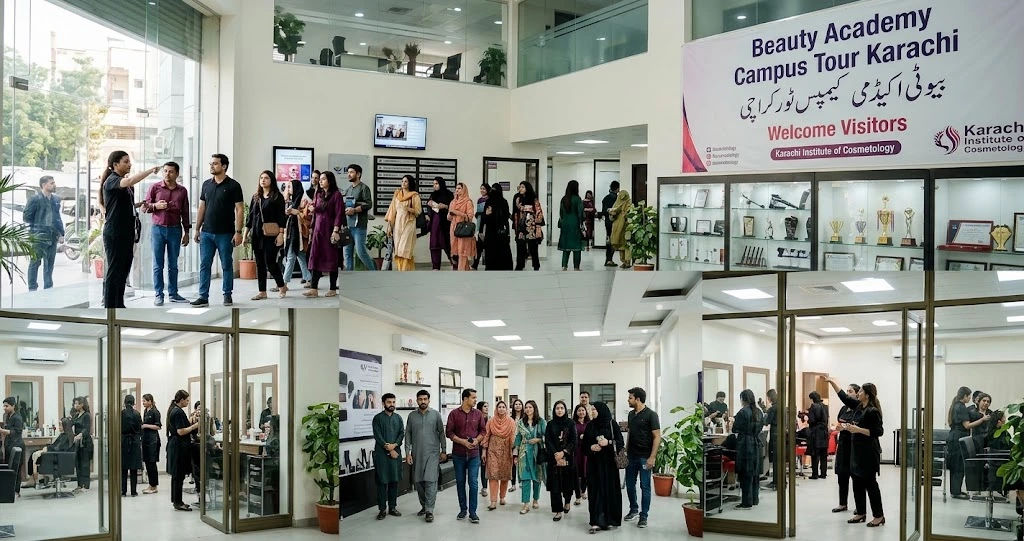 A campus visit allows students to see whether the institution provides a professional and comfortable environment for learning.
A beauty academy campus tour Karachi can help prospective students understand how beauty education works inside a professional training institute. It gives visitors an opportunity to explore classrooms, makeup stations, skincare laboratories, hair styling areas, and other practical learning spaces. Instead of relying only on photographs or online descriptions, students can observe the actual facilities and ask questions about their training experience.
Training rooms are particularly important because beauty education involves more than theoretical knowledge. Students need hands-on experience to develop professional skills, understand beauty products, and learn how to work with different clients. A campus tour can help them determine whether the academy has suitable spaces and equipment for practical lessons.
This comprehensive guide explains what students can expect during a campus visit, which training rooms they should inspect, what questions they should ask, and how to evaluate an academy before choosing a course.
Why Are Training Rooms Important in a Beauty Academy?
Training rooms are among the most important facilities in any professional beauty institute. They provide students with an environment where they can practise techniques, learn from instructors, and develop confidence.
Beauty courses usually include several practical subjects, such as makeup application, skincare, hair styling, nail care, and salon management. Each subject may require different equipment and a specific learning environment.
For example, makeup students need proper mirrors, lighting, makeup stations, brushes, and cosmetic products. Skincare students may require treatment beds, facial equipment, and hygiene supplies.
When visiting an academy, students should pay attention to whether its training rooms are designed to support these activities.
Practical Learning Opportunities
Practical learning helps students understand how professional beauty treatments are performed. Reading about makeup techniques or watching demonstrations is useful, but performing those techniques develops actual skills.
A properly equipped training room allows students to practise under an instructor's supervision. They can improve their methods, correct mistakes, and become familiar with professional equipment.
A Professional Learning Environment
The appearance and organisation of a training room can also tell students something about the academy's approach to education.
Clean workstations, organised products, sufficient lighting, and comfortable seating contribute to a positive learning experience.
Students should also observe whether the rooms are spacious enough for practical activities and whether instructors can provide individual attention.
Can a Campus Tour Show Actual Training Rooms?
Yes, most academies that arrange campus visits can allow prospective students to view their available training rooms. However, the facilities shown may depend on the academy's visitor policy, class schedules, and safety arrangements.
A beauty academy campus tour Karachi can provide a useful opportunity to see the learning spaces where students attend their lessons.
Some academies may offer guided tours with an admissions representative, while others may arrange visits with instructors.
During the visit, students can request permission to explore different departments and understand how each room is used.
Viewing Makeup Training Rooms
Makeup training rooms are essential for students interested in becoming professional makeup artists.
During the tour, visitors should look for:
-
Individual makeup stations.
-
Large mirrors with suitable lighting.
-
Professional makeup chairs.
-
Cosmetic products for practice.
-
Brushes, sponges, and application tools.
-
Storage spaces for beauty equipment.
-
Comfortable working arrangements.
Good lighting is especially important because makeup artists need to understand how different colours and products appear under various lighting conditions.
Students should also ask whether the academy provides practice materials or expects learners to bring their own kits.
Exploring Hair Styling Rooms
Hair styling is another important area of professional beauty education.
A dedicated hair training room may contain styling chairs, mirrors, hair dryers, straighteners, curling tools, wash stations, and other salon equipment.
Visitors should check whether students receive opportunities to practise different hairstyles and hair treatments.
They can also ask whether practical sessions involve mannequins, live models, or both.
Checking Skincare and Facial Training Areas
Skincare training requires a clean and organised environment.
A skincare room may include treatment beds, facial steamers, magnifying lamps, skincare products, towels, and other professional equipment.
Students should observe whether the facilities are maintained properly and whether hygiene procedures are followed.
They should also ask how instructors teach facial treatments, skin analysis, cleansing techniques, and basic skincare procedures.
What Other Facilities Can Students Explore During a Campus Tour?
A beauty academy may provide more than makeup, hair styling, and skincare rooms. Depending on its courses and available facilities, students may also find specialised spaces for additional beauty subjects.
A campus visit can help them understand the complete learning environment.
Nail Art and Manicure Training Rooms
Nail care courses require specialised tools and materials.
Students may practise nail shaping, polishing, manicure techniques, nail extensions, and basic nail art.
During the visit, look for manicure tables, nail lamps, nail polish collections, sanitising products, and appropriate storage facilities.
A well-organised nail training area makes it easier for students to practise safely and develop precision.
Classroom and Theory Learning Areas
Although practical training is essential, theoretical knowledge is equally important.
Students need to understand skin types, product ingredients, hygiene, colour theory, beauty techniques, and client communication.
A theory classroom should provide comfortable seating, suitable lighting, and enough space for students.
Some academies may also use projectors, educational videos, printed materials, and demonstrations to explain different concepts.
Student Practice and Demonstration Areas
Some institutions provide separate spaces where instructors demonstrate techniques before students begin practising.
These areas allow learners to observe professional methods closely.
Students should ask whether demonstrations are included in the regular course schedule and whether every learner receives an opportunity to practise afterward.
What Should Students Check During a Beauty Academy Visit?
Seeing training rooms is useful, but students should not make their decisions based only on the appearance of the campus.
They should evaluate several factors to understand whether the academy can provide a suitable educational experience.
Cleanliness and Hygiene Standards
Cleanliness is extremely important in beauty education because students frequently work with cosmetics, skincare products, brushes, and personal grooming equipment.
During the visit, check whether:
-
Workstations are cleaned regularly.
-
Brushes and tools are sanitised appropriately.
-
Disposable materials are available when required.
-
Products are stored correctly.
-
Treatment beds and chairs are maintained.
-
Waste materials are disposed of safely.
An organised environment demonstrates that the academy takes professional hygiene seriously.
Availability of Equipment
A beautiful training room is not necessarily a well-equipped training room.
Students should check whether the academy has enough equipment for its enrolled learners.
If several students must share a small number of makeup stations or styling tools, practical learning opportunities may become limited.
Ask whether equipment is provided during lessons and whether students need to purchase additional materials.
Classroom Size and Student Capacity
The number of students in each class can influence the quality of instruction.
Smaller groups may allow instructors to provide more individual guidance. Larger groups may require additional trainers, equipment, and practice stations.
During a beauty academy campus tour Karachi, prospective students should ask about the average class size and the number of students assigned to each instructor.
This information can help them understand how much practical attention they are likely to receive.
Questions to Ask During a Campus Tour
A campus visit becomes more valuable when students prepare questions before arriving.
Asking relevant questions helps visitors collect information that may not be available on an academy's website or social media pages.
Questions About Training Facilities
Students can ask:
-
Are all training rooms available for enrolled students?
-
Does every course have a dedicated practical training area?
-
How many students share one makeup station?
-
Are professional tools provided during classes?
-
Can students practise outside regular lesson hours?
-
Are the training rooms regularly maintained?
-
Do students practise on real models?
These questions provide a clearer picture of the academy's practical learning arrangements.
Questions About Instructors
Qualified and experienced instructors play an important role in beauty education.
Students should ask about the teachers' professional backgrounds, industry experience, and teaching methods.
They can also ask whether instructors demonstrate techniques before practical sessions and provide feedback during student practice.
An academy should be able to explain how students receive guidance when they struggle with a particular technique.
Questions About Courses and Certification
Students should also understand the academic structure before enrolling.
Ask about course duration, lesson schedules, practical assessments, examination requirements, and certification.
If the academy advertises professional certification, visitors should confirm which organisation issues the certificate and whether it is recognised by relevant employers or industry bodies.
It is also useful to ask whether students receive a portfolio of their completed practical work.
How to Evaluate the Quality of Training Rooms
Not every academy provides the same standard of facilities. Some institutions invest heavily in modern equipment, while others operate with basic training arrangements.
Students should evaluate the facilities according to their learning requirements.
Compare Equipment With Course Requirements
The equipment available should match the subjects included in the course.
For instance, a professional makeup course should provide appropriate makeup stations, mirrors, lighting, and application products.
Similarly, a hair styling course should include the equipment needed to practise the techniques taught in the curriculum.
If the facilities do not match the course description, students should ask for clarification.
Observe an Actual Class if Possible
One of the most useful ways to evaluate an academy is to observe a lesson.
If the institution allows it, students can watch an instructor demonstrate a technique and see how learners use the equipment.
This provides insight into teaching quality, classroom organisation, and student participation.
A beauty academy campus tour Karachi that includes an opportunity to observe practical learning can be more informative than a visit limited to reception and administrative areas.
Check Whether Equipment Is Modern and Functional
Professional beauty equipment should be safe, clean, and suitable for the techniques being taught.
Students should not focus only on expensive machines or attractive furniture.
The important consideration is whether the equipment works properly and supports the course curriculum.
For example, working hair dryers, clean treatment beds, functional nail lamps, and properly maintained makeup mirrors are more useful than decorative equipment that students cannot operate.
Benefits of Visiting Before Enrolling
A campus tour can help students make better educational decisions.
It allows them to replace assumptions with direct observations and understand what they can expect after joining the institution.
Better Understanding of the Learning Environment
Online photographs may show attractive classrooms, but they do not always explain how the rooms are used.
A physical visit allows students to examine the facilities, observe the surroundings, and ask questions.
They can determine whether the academy provides a comfortable environment for learning.
Increased Confidence Before Admission
Choosing a beauty course can involve financial and personal commitments.
Students may feel uncertain about course quality, teaching standards, and available facilities.
Visiting the academy can reduce some of this uncertainty.
Seeing the training rooms and speaking with staff can make the admission decision easier.
Opportunity to Compare Different Academies
Students can visit multiple institutions before making their choice.
They can compare training rooms, equipment, class sizes, instructors, course structures, and fees.
Instead of selecting an academy based only on advertisements, they can make a decision based on practical observations.
Understanding Future Career Preparation
A professional beauty academy should prepare students for real working environments.
During a campus visit, students can ask whether the institute offers practical projects, model-based training, client-handling exercises, or internship opportunities.
These activities can help learners understand how beauty services are delivered in salons and professional studios.
Are Campus Tours Available for Beginners?
Yes, beginners can also request campus tours before joining a beauty course.
In fact, visiting the institution may be especially helpful for people who have never studied beauty or makeup professionally.
They may not know which facilities are necessary for their chosen subject.
An instructor or admissions representative can explain the purpose of different training rooms and how students use them throughout the course.
Guidance for First-Time Beauty Students
Beginners should focus on understanding the complete learning process.
They can ask how lessons start, which basic techniques are taught first, and how practical skills develop over time.
They should also check whether the academy accepts students without previous experience.
A supportive learning environment can help beginners feel comfortable while developing new abilities.
Choosing the Right Course
A campus visit can also help students identify which beauty subject interests them most.
For example, someone interested in makeup may prefer a course with extensive makeup practice facilities.
Someone interested in skincare may look for a programme that includes facial treatments, skin analysis, and practical demonstrations.
Students should choose a course according to their interests, career goals, and available learning opportunities.
Common Mistakes to Avoid During a Campus Tour
Although visiting an academy is beneficial, students sometimes overlook important details.
Avoiding these mistakes can help them evaluate the institution more effectively.
Judging Only by Interior Decoration
Attractive walls, furniture, and reception areas can create a positive first impression.
However, decoration does not guarantee quality education.
Students should pay more attention to equipment, teaching arrangements, cleanliness, and practical opportunities.
Not Asking About Practical Sessions
Some students focus mainly on course fees and duration.
They forget to ask how much time is dedicated to practical training.
Since beauty education depends heavily on hands-on experience, students should understand the balance between theory and practice.
Ignoring Additional Costs
Course fees may not include every expense.
Students should ask whether they need to purchase makeup kits, brushes, uniforms, skincare products, or other materials.
They should also confirm whether examination and certification fees are included.
Relying Only on Promotional Pictures
Promotional photographs may not represent the complete campus.
Students should request permission to view the actual training spaces and confirm that the facilities shown are available to enrolled learners.
A personal visit offers a better understanding of the institution.
How to Prepare for Your Campus Tour
A little preparation can make the visit more productive.
Students should contact the academy before arriving to confirm visiting hours and whether appointments are necessary.
They should also explain which courses they are interested in so the institution can arrange an appropriate tour.
Here are some useful preparation tips:
-
Write down questions about training rooms.
-
Research the courses offered by the academy.
-
Ask about practical training requirements.
-
Confirm whether visitors can observe active classes.
-
Check course fees and additional expenses.
-
Ask about certification and career support.
-
Take notes about facilities and equipment.
-
Compare the academy with other available options.
During the visit, students should communicate openly with staff and request clear answers.
They should avoid making an immediate decision simply because the academy offers an attractive admission package.
What If an Academy Does Not Allow Visitors Inside Training Rooms?
Some academies may restrict access to certain areas because classes are taking place or students are practising treatments.
Privacy, hygiene, safety, and institutional policies may also limit visitor access.
This does not automatically mean that the academy has poor facilities.
However, prospective students should still receive reasonable information about the training environment.
They can request photographs, videos, a demonstration, or a separate appointment when the rooms are available.
They may also ask to speak with an instructor who can explain the equipment and practical learning arrangements.
A professional institution should be willing to address reasonable questions about its facilities, even when a complete tour is not possible.
How to Choose the Best Beauty Academy in Karachi
Choosing an academy requires careful consideration of several factors.
A well-equipped campus is important, but it should be supported by effective teaching, a relevant curriculum, and sufficient practical experience.
Students should consider the following points before enrolling.
Review the Course Curriculum
The curriculum should clearly explain the subjects covered, practical activities, and learning outcomes.
Students should understand whether the programme matches their career interests.
Check Instructor Experience
Ask whether instructors have relevant industry experience and professional qualifications.
Their ability to explain techniques and guide students is just as important as their own professional background.
Compare Fees and Facilities
Compare the course fees with the facilities, equipment, practical sessions, and additional benefits offered.
The cheapest course is not always the best option, and an expensive course does not automatically guarantee quality.
Read Student Reviews
Feedback from former and current students can provide useful information about teaching quality and learning experiences.
However, reviews should be considered alongside direct observations and clear information from the academy.
Confirm Certification Details
Before paying admission fees, confirm the certificate's issuing authority, course completion requirements, and any relevant accreditation claims.
Students should request written details rather than relying entirely on verbal promises.
Conclusion
A campus tour is an excellent way to understand what a beauty academy offers before enrolling in a professional course. It allows prospective students to explore the learning environment, inspect practical facilities, and ask important questions about their future education.
A beauty academy campus tour Karachi can show different training rooms, including makeup studios, hair styling areas, skincare rooms, nail art stations, and theory classrooms. However, the exact facilities available for viewing depend on the academy's arrangements and visitor policies.
Students should look beyond attractive interiors and focus on the quality of equipment, cleanliness, classroom organisation, instructor experience, and practical learning opportunities. They should also ask about course duration, certification, additional expenses, and opportunities to practise their skills.
For beginners, a campus visit can be particularly valuable because it helps them understand how professional beauty education works. It also allows them to identify the facilities they need for their chosen career path.
Before making an admission decision, students should consider visiting more than one institution and comparing their facilities and teaching methods. They should choose an academy that offers a suitable combination of practical training, experienced instructors, professional equipment, and a supportive learning environment.
Ultimately, the purpose of visiting a beauty academy is to make an informed decision. By inspecting the training rooms and understanding the educational facilities, students can select an institution that supports their goals and helps them develop the confidence and skills needed to enter the beauty industry